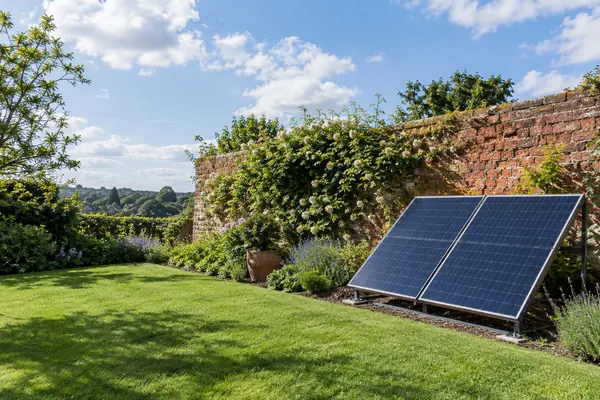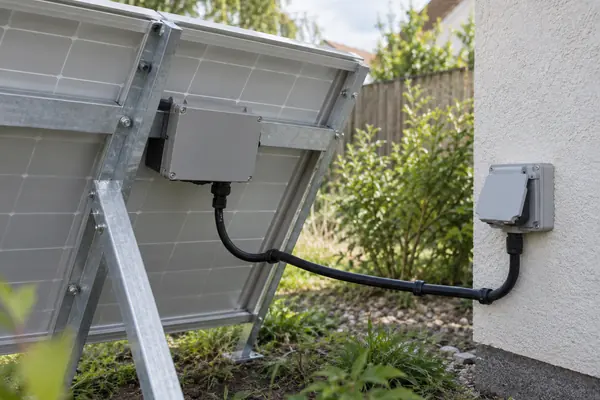
HOW IT WORKS
Panel to outlet
Utah's law describes a moveable photovoltaic device designed to connect to a building's electrical system through a standard 120-volt AC outlet, meant mainly to offset part of the home's use.
Is it allowed here? achomesolar
00NEW IN A GROWING LIST OF STATES

Solar no longer needs a roof.
Since May 7, 2025, Utah law has let a portable solar device of up to 1,200 watts plug into a standard 120-volt outlet without a utility interconnection agreement. By July 2026, eight more states had passed plug-in solar laws.
Is it allowed here?01Principles
02THE SHORT ANSWER
Plug-in solar works like rooftop solar,
only smaller and plugged into an outlet.
HOW IT WORKS
Utah's law describes a moveable photovoltaic device designed to connect to a building's electrical system through a standard 120-volt AC outlet, meant mainly to offset part of the home's use.
Is it allowed here?THE LIMIT
Under Utah's law a qualifying device has a maximum output of not more than 1,200 watts, must meet the latest National Electrical Code and be certified by UL or an equivalent lab.
See the numbersBEFORE YOU PLUG IN
Outside the states that have passed plug-in laws, utility interconnection rules still apply to anything that sends solar power into home wiring.
The checklist03A QUICK STATE CHECK
Pick your situation to see what the rules say. The bar shows how clear the path is for a plug-in kit today.
Based on Utah H.B. 340 (2025) and a July 2026 legislative roundup by the advocacy group Third Act. General information, not electrical or legal advice for your home.
04TWO NUMBERS WORTH KNOWING
One figure on the size limit,
one on the outlet it plugs into.
1,200 W
Maximum output of one portable device
Utah defines a portable solar generation device as one with a maximum power output of not more than 1,200 watts, certified by UL or an equivalent nationally recognized testing laboratory.
SIZE LIMIT · UTAH H.B. 340
120 V
Connects through a standard outlet of
The device must be designed to connect to the building's electrical system through a standard 120-volt alternating current outlet and meet the most recent National Electrical Code.
THE OUTLET · UTAH H.B. 340
Utah's law also says such a device is not part of the net metering program, and the utility is not liable for damage or injury it causes.
05FOUR CHECKS FIRST
State law and safety testing bodies point to a short list of checks before a kit goes into an outlet.
Only some states have passed plug-in solar laws. Elsewhere, ask your utility how its interconnection rules apply.
Utah requires certification by UL or an equivalent lab. UL Solutions points to UL 3700, its outline for interactive plug-in PV equipment.
Renters, condo owners and HOA members should get permission before fixing panels to a balcony, wall or yard.
The kit should stop sending power when the grid is down. Utah's law requires a feature that does exactly that.

06WHY SAFETY BODIES ARE CAUTIOUS
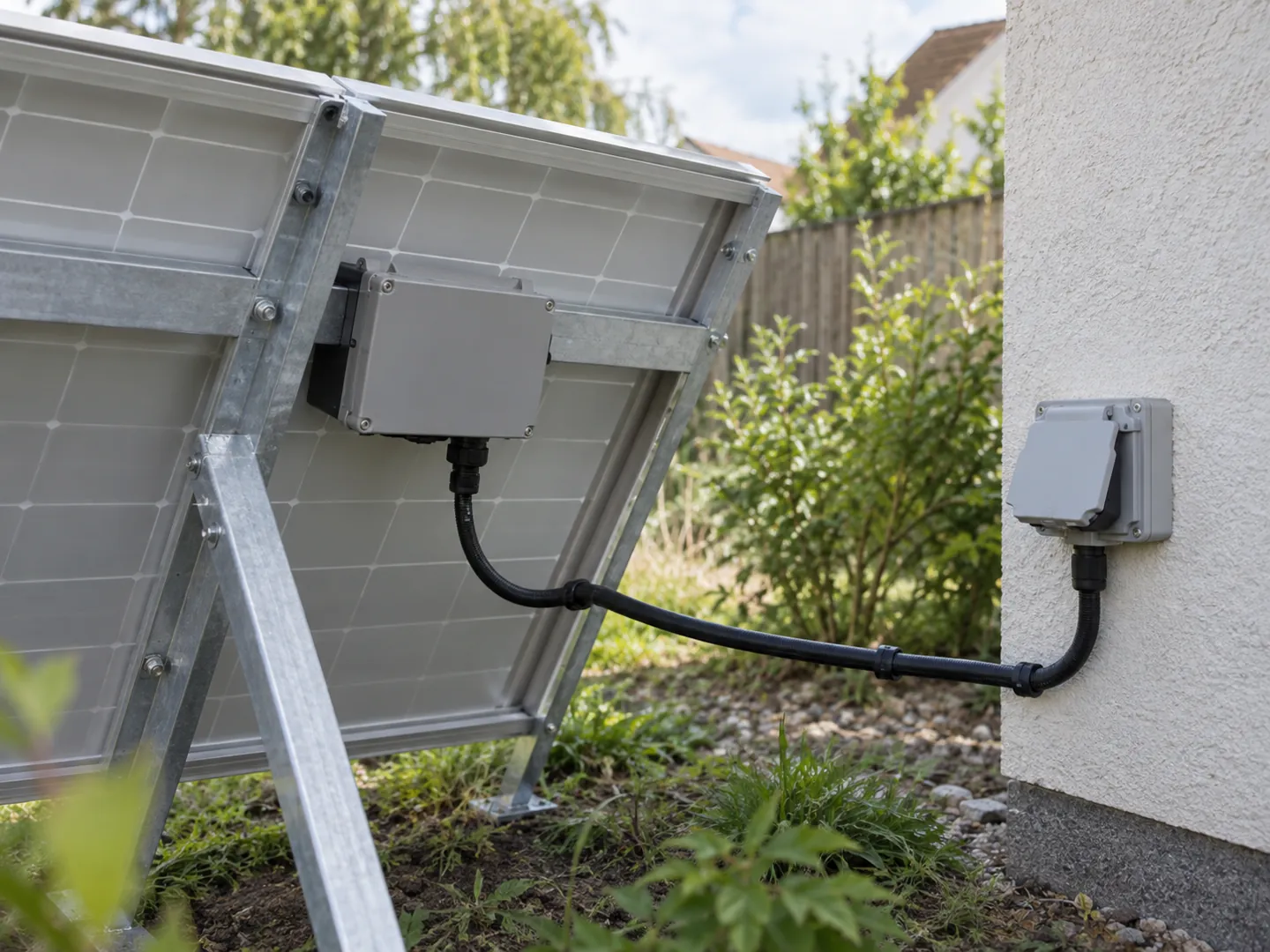
Ordinary appliances take power from your wiring. In testimony filed with the Vermont legislature, UL Solutions said plug-in PV can circumvent or degrade protective features required by the National Electrical Code.
It listed overcurrent conditions, a lack of compatibility with ground fault circuit interrupters (GFCIs) and touch-safety concerns among the hazards. UL 3700 sets construction, performance, marking and installation requirements for plug-in PV and calls for special installation practices to reduce those risks.
07Questions
It depends on the state. Utah's law took effect May 7, 2025. A July 2026 roundup by Third Act lists Maine, Virginia, Colorado, Maryland, New Hampshire, Connecticut, Vermont and New York as having passed plug-in solar laws too.
In Utah, a qualifying portable device can have a maximum output of not more than 1,200 watts. Other states set their own limits, so check the law where you live.
No. Utah's law requires a device or feature that prevents it from energizing the building's electrical system during an outage.
Not in Utah: the law bars the utility from requiring approval or charging a fee for a qualifying device. In states without a plug-in law, standard interconnection rules may apply.
Not in Utah. The law says a qualifying portable device is not subject to the state's net metering program requirements.
08Sources
ABOUT THIS NAME
achomesolar.com is part of the DoodleSale portfolio. It isn't in an auction right now, but you can ask about leasing it.